Decibels, Damping, and Design: Why PVC Foam Board Is Becoming the Acoustic Material of Choice in US Industrial Facilities
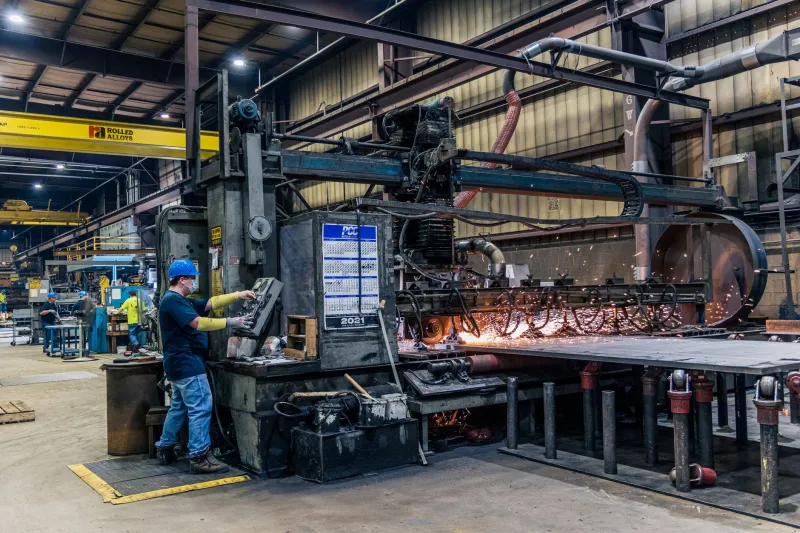
For decades, industrial facility designers have treated noise as an unavoidable byproduct of operations—something to be managed with earmuffs and posted warning signs rather than engineered out of the built environment. That approach is becoming increasingly untenable. OSHA's permissible exposure limits for occupational noise, combined with a growing body of research linking chronic noise exposure to reduced cognitive performance and increased error rates, are compelling facility managers and structural engineers alike to integrate acoustic control into the core design specification rather than address it as an afterthought.
What has changed, in part, is the material palette available to designers. PVC foam board—long valued in US construction and manufacturing for its dimensional stability, moisture resistance, and structural consistency—has begun attracting serious attention for a property that rarely appears on its specification sheet: acoustic performance. Understanding why requires a closer look at the physics of sound transmission and how closed-cell foam structures interact with it.
The Physics of Sound and Closed-Cell Foam
Sound travels as a pressure wave, and its energy is dissipated through three primary mechanisms: absorption (converting sound energy to heat within a material), reflection (bouncing sound back toward its source), and transmission loss (the reduction of sound energy passing through a barrier). Effective acoustic management in industrial environments typically requires some combination of all three.
PVC foam board's closed-cell structure gives it a distinct advantage in the transmission-loss category. Unlike open-cell foams, which allow air—and therefore sound—to pass through interconnected pores, closed-cell PVC foam board presents a continuous matrix of sealed cells. This architecture resists the passage of airborne sound waves while simultaneously adding mass to a partition or panel assembly. Mass is a foundational principle in acoustic engineering: the heavier a barrier, the more energy a sound wave must expend to set it into motion.
Additionally, the viscoelastic properties of PVC contribute to vibration damping. When mechanical vibration—from compressors, conveyor systems, or HVAC fans—is transmitted through structural connections, PVC foam board installed as an intermediate layer dissipates a portion of that energy as heat rather than allowing it to propagate as radiated noise. This behavior is particularly relevant in applications where structure-borne sound is the dominant problem.
Sound Absorption Coefficients Across Frequency Ranges
Acoustic performance is frequency-dependent, and this is where industrial specifiers need to exercise careful judgment. PVC foam board is not a broadband absorber in the same category as fiberglass batts or mineral wool. Its noise reduction coefficient (NRC) values are generally moderate, typically ranging from 0.10 to 0.35 depending on thickness, density, and surface treatment. These figures reflect meaningful but not dominant absorption performance.
However, PVC foam board's contribution to sound transmission class (STC) ratings—a measure of a partition's ability to block airborne sound—is more compelling. When incorporated into composite wall or ceiling assemblies, PVC foam board panels can contribute meaningfully to overall STC performance, particularly in the mid-frequency range (500 Hz to 2,000 Hz) where much of industrial machinery noise is concentrated. Thicker panels and higher-density formulations generally yield better performance in the lower frequency bands that are hardest to control.
For facilities where low-frequency noise from large rotating equipment is the primary concern, PVC foam board is most effective when used in conjunction with dedicated mass-loaded vinyl or decoupled framing systems. Specifying it as a standalone acoustic solution in those environments would be an overclaim; specifying it as a durable, structurally capable component within a layered acoustic assembly is an accurate and practical approach.
Data Centers: A Case Study in Multi-Threat Environments
US data centers present an instructive example of where PVC foam board's combined property profile becomes strategically valuable. These facilities face acoustic challenges from two directions simultaneously: the mechanical noise generated by server cooling systems, UPS equipment, and CRAC units, and the vibration sensitivity of the servers themselves, which can experience read/write errors when subjected to resonant frequencies in the 100 Hz to 300 Hz range.
Facility engineers at several Midwest data center installations have incorporated PVC foam board into equipment room wall linings and raised-floor plenum panels precisely because it addresses both concerns without introducing the moisture vulnerability that disqualifies many traditional acoustic materials. In high-density server environments where humidity management is critical, the moisture impermeability of PVC foam board eliminates the risk of acoustic panels becoming a vector for mold growth—a failure mode that has compromised installations using fiberglass-faced panels in humid climates.
HVAC Integration and Duct Liner Alternatives
Noise transmission through HVAC ductwork is a persistent problem in manufacturing environments, particularly in facilities where office or quality-control spaces are located adjacent to production floors. Traditional duct liner materials—typically fiberglass—provide reasonable acoustic performance but degrade over time in high-velocity airstreams, shedding fibers that contaminate the air supply and compromise indoor air quality standards.
PVC foam board has been adopted in several US manufacturing facilities as an alternative duct liner substrate and as a material for prefabricated duct enclosures. Its smooth, non-fibrous surface does not shed particulates, and its closed-cell structure resists the moisture absorption that accelerates degradation in conventional liner materials. While its NRC values require careful assembly design to meet acoustic targets, the longevity advantage often justifies the specification decision on a lifecycle basis.
Regulatory and Productivity Dimensions
OSHA Standard 1910.95 establishes permissible noise exposure limits of 90 dBA for an eight-hour time-weighted average, with mandatory hearing conservation programs triggered at 85 dBA. Facilities that exceed these thresholds face not only compliance costs—audiometric testing, hearing protection programs, and administrative controls—but also measurable productivity penalties. Research consistently demonstrates that sustained exposure to noise above 75 dBA impairs concentration, increases error rates in precision tasks, and elevates physiological stress markers in workers.
For US manufacturers operating in competitive environments, the business case for acoustic investment is increasingly quantifiable. Facilities that have integrated PVC foam board into partition systems, equipment enclosures, and ceiling assemblies as part of broader noise-reduction programs report measurable reductions in ambient noise levels—in some cases sufficient to move operations below the threshold that triggers mandatory hearing conservation requirements, eliminating a significant ongoing compliance cost.
Specifying for Acoustic Performance: Practical Guidance
Engineers and facility managers evaluating PVC foam board for acoustic applications should consider several specification variables. Panel density is the most significant driver of transmission loss performance; higher-density boards deliver meaningfully better STC contribution than lower-density equivalents. Thickness matters particularly in the lower frequency range, where thicker panels provide more effective damping. Surface texture and finish affect absorption coefficients and should be matched to the dominant noise frequency profile of the application.
Composite assemblies—PVC foam board laminated with mass-loaded vinyl, or installed within a decoupled stud-and-track framing system—consistently outperform single-material solutions and should be the default specification approach in high-noise industrial environments. Consulting acoustic performance data from panel manufacturers, including third-party laboratory test results for STC and NRC, is essential before finalizing specifications.
A Material Whose Full Value Is Still Being Discovered
PVC foam board has earned its position in US industrial construction on the strength of properties that are well understood and widely documented. Its acoustic performance represents a dimension of that value that the industry is only beginning to quantify and exploit systematically. For facility designers willing to engage with the acoustic data and integrate PVC foam board thoughtfully into layered assembly systems, the material offers a durable, moisture-resistant, structurally capable foundation for noise-control strategies that meet both regulatory requirements and operational performance goals.