Reading Between the Millimeters: What Tolerance Grades Really Deliver When PVC Foam Board Hits Your Dock
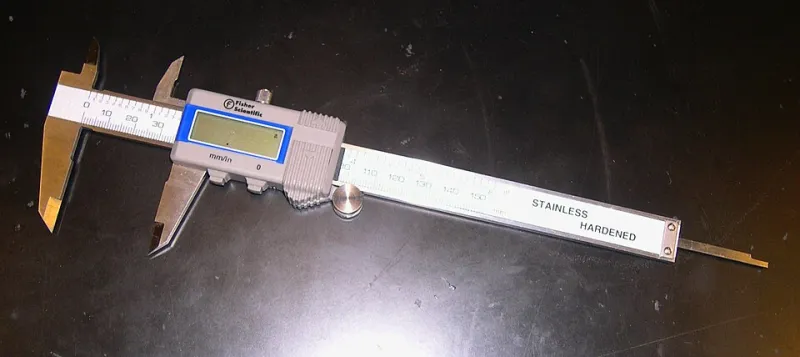
Photo: Theornamentalist, CC BY-SA 3.0, via Wikimedia Commons
The Spec Sheet Is a Promise, Not a Measurement
Every PVC foam board datasheet reads with confidence: 6 mm nominal thickness, ±0.3 mm tolerance, 0.55–0.65 g/cm³ density, flatness within 1 mm per meter. For a purchasing manager reviewing twenty candidate suppliers, those numbers function as a sorting mechanism. For a fabricator running a CNC router at 7 a.m. on a Monday, they are a hypothesis awaiting verification.
The uncomfortable truth circulating among US fabricators is that the distance between a datasheet and a delivered pallet can be wider than the tolerance band itself. Understanding where that gap comes from — and how to close it contractually — is one of the least glamorous, most consequential skills in industrial procurement.
Where the Gap Originates
Tolerance drift rarely begins with deception. It begins with measurement conditions, manufacturing method, and the definitions embedded in the standard the supplier cites.
Manufacturing method matters. Free-foam, Celuka, and laminated PVC foam board lines produce measurably different surface skins and density gradients. A "6 mm" sheet from a free-foam line may taper across its width by more than the stated tolerance, while a Celuka line holds thickness more tightly at the cost of a harder skin. If the datasheet doesn't disclose the process, the tolerance claim is incomplete.
Measurement conditions matter. PVC foam board absorbs moisture and responds to ambient temperature. Sheets measured hot off the line, in a humid warehouse, or immediately after transit will read differently than the same sheets conditioned at 73°F and 50% relative humidity — the conditions most international standards assume. A fabricator in Houston in July is not measuring the same material as the supplier's QC lab in February.
Sampling density matters. A supplier that measures one sheet per shift is reporting best-case numbers. One that measures every two hundredth sheet is reporting something closer to a distribution. The datasheet rarely says which.
What Fabricators Actually See
Conversations with fabrication shops across the Midwest and Southeast surface a consistent set of symptoms:
- Thickness variation across the sheet width, not just sheet to sheet. A panel that measures 6.2 mm on the left edge and 5.7 mm on the right will defeat a fixed-depth routing operation, producing flush-mount assemblies with visible steps.
- Flatness memory. Sheets stored vertically for months on a hot loading dock arrive with permanent bow that no amount of weighting on the shop floor fully reverses before the run starts.
- Density drift within a single pallet. Sheets from the outer positions of a bundle, exposed to compression during transit, can measure meaningfully lighter than core sheets — enough to shift screw-pullout values and adhesive coverage calculations.
None of these symptoms necessarily violates the printed tolerance. That's the point. A tolerance stated as an average, or measured under unstated conditions, can be technically true and operationally useless.
The Buyer's Verification Checklist
Before signing the next purchase order, buyers can apply five checks that take less time than a single rejected production run:
1. Demand the measurement protocol, not just the number. Ask which standard governs the tolerance (ASTM, ISO, or an internal spec), how many points per sheet are measured, and under what conditioning. A supplier who answers in one sentence has a protocol. A supplier who answers with a brochure does not.
2. Specify the manufacturing process by name. Write "Celuka" or "free-foam" into the PO. Process is the single largest driver of skin hardness, thickness consistency, and edge quality — and it is almost never on the datasheet.
3. Condition and measure incoming material yourself. Acquire a calibrated digital thickness gauge and a straightedge. Sample five sheets per pallet at defined points (corners, mid-edges, center) after 24 hours of shop-floor conditioning. Log the results. The log becomes leverage in the next negotiation.
4. Tie acceptance to function, not averages. Where thickness drives fit, specify a minimum-and-maximum envelope at every measured point rather than a mean tolerance. Where density drives fastener performance, specify a minimum at the lightest sheet, not an average across the pallet.
5. Make the first article inspection contractual. For any new supplier or new grade, define a first-article acceptance step with a defined rejection and return procedure. Suppliers with genuine quality systems welcome this; it filters out the ones who don't.
Tolerances as a Total-Cost Line Item
The cheapest sheet per square foot is frequently the most expensive per finished part. A supplier charging 8% more per panel but delivering twice-held tolerances eliminates rework, router bit changes, assembly shimming, and the overtime that follows a failed run. When fabricators describe their "nightmare material," they almost never describe a sheet that failed catastrophically — they describe a sheet that was almost right, in ways the spec sheet said it shouldn't be.
Tolerance grades are not marketing fiction, but they are conditional claims. The buyers who treat them as starting points for verification — rather than endpoints for negotiation — are the ones whose fabrication runs start on time on Monday morning.