Unexpected Champion: How PVC Foam Board's Cellular Architecture Rivals Dedicated Acoustic Materials on the Industrial Floor

For decades, industrial facility managers and construction engineers have operated under a straightforward assumption: if you need thermal insulation, you specify one material, and if you need sound control, you specify another. The result is layered assemblies, inflated budgets, and installation timelines that stretch well beyond original projections. What a growing body of field evidence now suggests, however, is that this dual-specification approach may be solving a problem that does not require two solutions.
PVC foam board — a material already trusted for its dimensional stability, moisture resistance, and chemical inertness — is demonstrating acoustic performance that, in many real-world industrial contexts, meets or exceeds that of products engineered exclusively for sound dampening. Understanding why requires a closer look at the material's internal geometry and how that geometry interacts with the physics of sound transmission.
The Physics Behind the Performance
Sound is, at its most fundamental level, mechanical energy propagating through a medium. When that energy encounters a material boundary, three things can happen: the sound reflects, it transmits through, or it is absorbed and converted into heat through friction and viscous dissipation. The ratio of these outcomes depends heavily on the material's density, stiffness, and internal structure.
PVC foam board's closed-cell architecture creates millions of discrete air pockets within a rigid polymer matrix. When sound waves enter this structure, energy is repeatedly disrupted at each cell wall interface. The wave cannot travel cleanly through a homogeneous medium — it must negotiate a complex lattice of boundaries that scatter, reflect, and attenuate its energy. This is precisely the mechanism that acoustic engineers attempt to engineer into specialty foam products, often at significantly higher cost per square foot.
The key distinction between open-cell and closed-cell foams matters here. Open-cell acoustic foams allow air movement through the material, which is effective at absorbing mid-to-high frequency airborne sound. Closed-cell PVC foam board, by contrast, resists airflow entirely. This makes it particularly effective at attenuating structure-borne noise and low-frequency vibration — the categories of sound that cause the most persistent problems in industrial environments and that open-cell specialty products often handle poorly.
Field Measurements Across Industrial Contexts
Several categories of industrial application have produced field data that challenge the conventional hierarchy between general-purpose and specialty acoustic materials.
Warehouse and distribution centers represent one of the most instructive cases. In large-format facilities where roof deck panels, interior partition walls, and loading dock surrounds are all clad with PVC foam board for thermal and moisture control purposes, ambient noise measurements have recorded reductions in the range of 8 to 14 decibels compared to unlined steel or concrete assemblies. For context, a 10-decibel reduction corresponds to a perceived halving of loudness to the human ear — a meaningful improvement in worker environments where OSHA noise exposure standards increasingly influence facility design decisions.
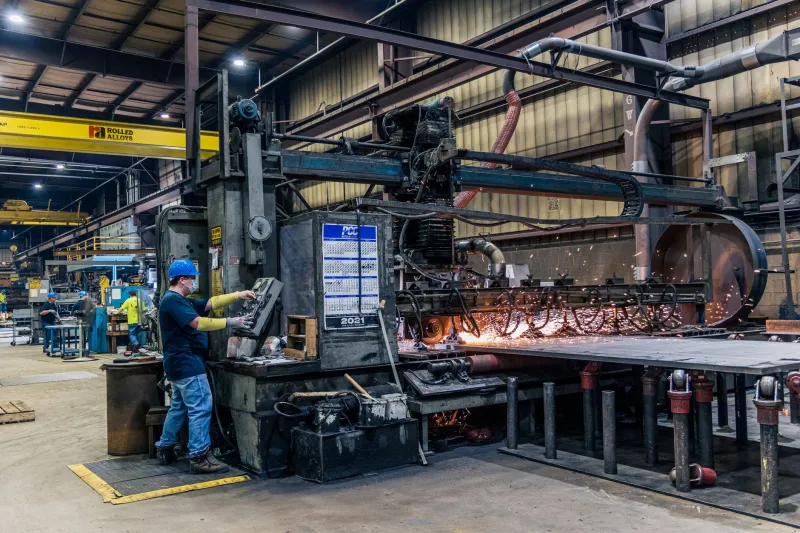
Manufacturing floors present a different acoustic challenge. Here, the dominant noise sources are machinery-generated vibration and impact noise transmitted through structural elements. PVC foam board installed as equipment pads, machinery surrounds, and wall liners introduces a decoupling layer between vibrating machinery and the surrounding structure. Because the material does not transmit vibration efficiently — its damping coefficient significantly exceeds that of steel, aluminum, or concrete — it interrupts the pathway through which structure-borne noise propagates. Facilities processing metal components, operating CNC equipment, or running continuous conveyor systems have reported measurable reductions in broadband noise levels after PVC foam board integration, without any dedicated acoustic treatment.
HVAC duct lining is perhaps the most technically instructive application. HVAC systems are prolific generators of both airborne noise — from fan turbulence and airflow — and structure-borne noise transmitted through ductwork. Traditional duct lining products are purpose-built for this environment, but they introduce complications: moisture absorption, fiber shedding in food-grade or cleanroom environments, and degradation under repeated thermal cycling. PVC foam board duct liners address all of these concerns simultaneously while delivering insertion loss values — the standard metric for duct acoustic performance — that are competitive with fiberglass-based alternatives across the frequency ranges most relevant to HVAC noise complaints.
The Cost and Complexity Argument
Performance comparisons become more compelling when placed alongside procurement and installation economics. Specialty acoustic products — mass-loaded vinyl barriers, constrained-layer damping panels, purpose-built acoustic foam assemblies — are priced at a premium that reflects both their specialized formulation and their narrower market volume. When a facility requires both thermal insulation and sound control, specifying two separate systems means two separate procurement processes, two sets of installation labor, and two categories of ongoing maintenance.
PVC foam board consolidates these requirements into a single material specification. The installed cost differential between a dual-material approach and a PVC foam board solution is substantial — estimates from industrial retrofit projects consistently place the savings in the range of 20 to 35 percent on a fully installed basis, depending on the application geometry and the specific acoustic products being displaced.
Installation complexity is an equally important variable in professional project planning. Specialty acoustic assemblies often require sequenced installation, adhesive compatibility verification, and careful detailing at penetrations and transitions to maintain acoustic continuity. PVC foam board, by contrast, is fabricated and installed using standard tools and techniques familiar to any experienced contractor. Its dimensional stability means that once installed, it does not require the periodic inspection and remediation that softer acoustic materials sometimes demand.
Where Specialty Products Still Hold an Edge
Objective analysis requires acknowledging the limits of PVC foam board's acoustic capabilities. In applications requiring extremely high sound transmission class (STC) ratings — recording studios, broadcast facilities, or specialized test chambers — purpose-built acoustic assemblies incorporating mass-loaded vinyl and decoupled wall systems will outperform any single-material solution. PVC foam board is not a substitute for engineered acoustic isolation in environments where near-total sound separation is the design objective.
Similarly, at very high frequencies — above approximately 4,000 Hz — open-cell acoustic foams can achieve absorption coefficients that PVC foam board does not match. If a facility's primary noise problem involves high-frequency machinery whine or ultrasonic processes, the acoustic absorption profile of PVC foam board may not align with the specific frequency content that requires treatment.
The professional specification decision, therefore, is not binary. It is a question of matching material characteristics to the actual acoustic demands of the environment — and in the vast majority of US industrial, manufacturing, and warehouse contexts, those demands fall squarely within the range where PVC foam board performs with distinction.
A Practical Reframing for Industrial Specifiers
The most useful reframe for professionals evaluating acoustic treatment options is this: stop asking whether a material was designed for acoustic control, and start asking whether it delivers acoustic control. PVC foam board was not engineered to be an acoustic product. It was engineered to be dimensionally stable, chemically resistant, thermally efficient, and moisture-impermeable. The fact that its cellular architecture also delivers meaningful sound attenuation is not incidental — it is a structural consequence of the same design principles that make it reliable across every other performance dimension.
For US industrial facilities navigating tightening noise regulations, worker comfort standards, and budget constraints simultaneously, that combination of properties is not a minor convenience. It is a specification advantage that deserves direct, data-driven consideration in every project where sound control is part of the performance brief.