Built to Absorb: The Case for PVC Foam Board in High-Vibration and High-Impact Industrial Environments
When the Floor Shakes, Materials Tell the Truth
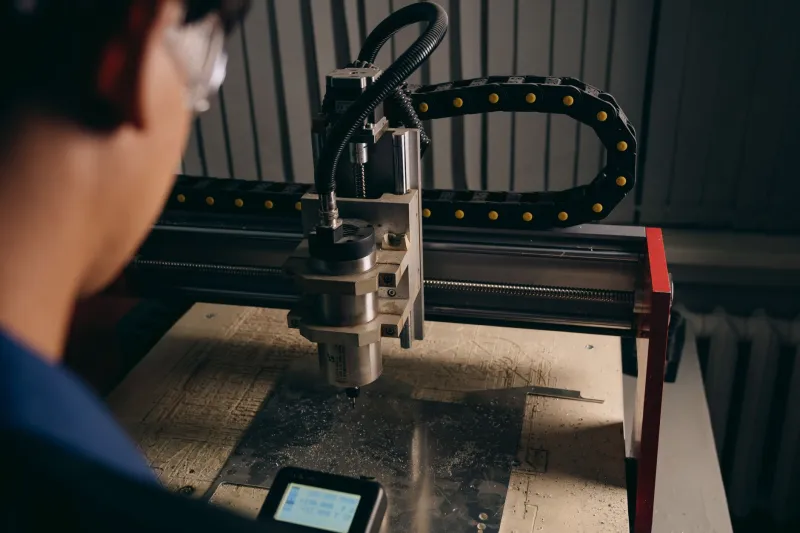
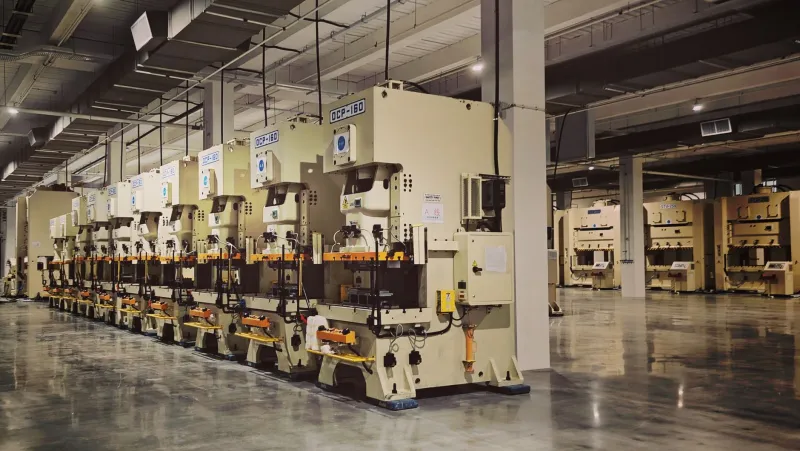
Heavy manufacturing environments are unforgiving. CNC machinery, stamping presses, pneumatic conveyors, and forklift traffic subject surrounding structures—panels, guards, partitions, enclosures—to constant mechanical stress. That stress reveals itself slowly in some materials and catastrophically in others. Fasteners work loose. Panels warp. Joints crack. And when a guarding panel fails adjacent to active machinery, the consequences extend well beyond the cost of a replacement sheet.
For industrial professionals responsible for specifying materials in these environments, dimensional stability under dynamic loading is not a secondary consideration. It is a core performance requirement. This guide examines why PVC foam board consistently meets that requirement where alternative materials fall short—and how to apply that performance advantage across a range of demanding industrial applications.
Understanding the Failure Modes of Conventional Materials
Before examining what PVC foam board does well, it is worth understanding precisely why common alternatives underperform in high-stress environments.
Wood and wood composites (plywood, MDF, particleboard) absorb vibration energy but do so at the cost of structural integrity over time. Repeated mechanical stress causes fiber separation at the cellular level. Moisture—present in virtually all industrial environments through humidity, cleaning operations, or process condensation—accelerates this degradation. Fastener pullout strength deteriorates as the surrounding material softens. The result is panels that appear intact but have lost meaningful structural capacity.
Aluminum composite panels offer stiffness but are susceptible to fatigue cracking at fastener points and panel edges under sustained cyclic loading. In high-vibration applications, the rigid face sheets can delaminate from the core material, compromising both structural integrity and surface finish.
Standard polypropylene and polyethylene sheets exhibit significant thermal expansion and contraction, creating dimensional instability in environments with temperature variation. In logistics facilities where loading dock doors cycle repeatedly through seasonal temperature swings, these materials can bow, gap, or bind within their mounting systems.
Each of these failure modes carries a cost—replacement material, labor, production interruption, and in some cases, safety incident exposure.
The Mechanical Properties That Matter
PVC foam board's performance in dynamic environments derives from a specific combination of material properties that work together under stress.
Cellular structure and energy absorption. The closed-cell foam matrix within PVC foam board acts as a distributed energy absorber. Rather than transmitting impact loads directly to fastening points or adjacent structures, the material dissipates energy across its cross-section. This characteristic reduces peak stress concentrations that would otherwise accelerate fatigue in denser, more rigid materials.
Low coefficient of thermal expansion. PVC foam board exhibits a thermal expansion coefficient significantly lower than polyethylene and polypropylene. In practical terms, this means panels maintain their dimensional relationship to mounting hardware and adjacent structures across a wider temperature range—a critical attribute in facilities that experience thermal cycling from process heat, HVAC variation, or outdoor exposure at loading areas.
Resistance to moisture-induced dimensional change. Unlike wood-based materials, PVC foam board does not absorb moisture. Its dimensions remain stable regardless of ambient humidity or direct water contact. In environments where washdown protocols are standard—food processing, pharmaceutical manufacturing, chemical handling—this property directly prevents the progressive dimensional drift that degrades panel fit and fastener retention in wood-based alternatives.
Screw and fastener retention. Higher-density PVC foam board formulations maintain fastener pullout values that are competitive with plywood across repeated load cycles. Because the material does not soften with moisture exposure, fastener performance does not degrade over the service life of the installation.
Real-World Applications and Performance Expectations
Machine Guarding and Equipment Enclosures
On active manufacturing floors, machine guards serve both a safety and an operational function. A guard that rattles, warps, or works loose under machinery vibration creates distraction, potential safety exposure, and unplanned maintenance events. PVC foam board panels installed as machine guards maintain their profile and fastener engagement under sustained vibration because their cellular structure absorbs rather than transmits the dynamic load. Facilities that have transitioned from plywood-backed guards to PVC foam board enclosures consistently report reduced maintenance intervals and improved panel service life.
Transportation and Logistics Hub Wall Cladding
Distribution centers and freight terminals present a specific combination of stressors: forklift impact, temperature cycling at dock doors, and the repeated mechanical stress of pallet staging and retrieval. Wall cladding and column protection in these environments must absorb impact without fracturing, and must maintain dimensional stability despite the thermal variation that occurs daily at dock interfaces.
PVC foam board's impact resistance—particularly in thicker profiles—provides meaningful protection against low-to-moderate forklift contact without the brittleness that causes polycarbonate or acrylic panels to crack. And unlike wood-faced cladding, PVC foam board panels do not swell or delaminate at dock door edges where moisture infiltration is routine.
Cleanroom and Controlled Environment Partitioning
In semiconductor fabrication, pharmaceutical production, and precision electronics assembly, dimensional stability in partition systems is essential to maintaining pressure differentials and contamination control. Panel materials that shift dimensionally—whether from thermal change or moisture—create gaps that compromise cleanroom integrity. PVC foam board's stable dimensions across temperature and humidity ranges make it a reliable substrate for cleanroom partition systems where tolerance management is non-negotiable.
Vibration-Dampening Equipment Bases and Fixtures
In precision machining environments, PVC foam board is increasingly specified as a tooling fixture and work-holding substrate because its cellular structure provides inherent vibration damping without adding significant mass. Fixtures fabricated from high-density PVC foam board absorb the micro-vibrations generated by cutting operations, improving surface finish quality and extending cutting tool life.
Specifying for Stress: Density and Thickness Considerations
Not all PVC foam board formulations perform equivalently in high-stress applications. Density is the primary variable governing mechanical performance.
For light-duty applications—signage substrates, interior partition facings, non-structural enclosures—standard densities in the 0.45 to 0.55 g/cm³ range are typically appropriate. For structural guarding, impact-exposed cladding, and tooling fixtures, higher-density formulations in the 0.55 to 0.70 g/cm³ range provide superior fastener retention, impact resistance, and compressive strength.
Thickness selection should account for unsupported span length and anticipated load type. Panels spanning significant distances without intermediate support in high-vibration environments benefit from greater thickness to resist resonant deflection. Consulting load and span data from the material supplier is advisable for structural applications.
The Downtime Calculus
The argument for PVC foam board in high-stress industrial applications ultimately reduces to a straightforward calculation. Materials that fail prematurely—whether through moisture degradation, fatigue cracking, or fastener pullout—generate replacement costs and, more significantly, production interruption costs. In active manufacturing facilities, unplanned downtime carries a per-hour cost that dwarfs the price differential between a standard panel material and a properly specified PVC foam board product.
For industrial professionals whose mandate includes both capital cost management and operational continuity, selecting materials that perform reliably under actual working conditions is not a premium—it is the economically rational choice. PVC foam board, properly specified for the stress profile of the application, consistently delivers on that standard.