Disposal Blind Spots: The Environmental Compliance Risks Quietly Draining Industrial Facility Budgets
For most industrial procurement teams, the conversation around PVC foam board ends at installation. Material is specified, delivered, fabricated, and put to work. What happens to the offcuts, expired panels, and end-of-life assemblies rarely receives the same level of strategic attention—and that oversight is increasingly expensive.
Environmental regulators at both the federal and state level have sharpened their focus on industrial solid waste streams over the past several years. Facilities that once disposed of PVC foam board scrap through general waste channels are now discovering that this practice carries meaningful regulatory exposure. The fines are real, the enforcement is escalating, and the compliance requirements vary enough from state to state that a practice considered acceptable in one jurisdiction may constitute a violation in another.
Understanding where the liability lives—and how to eliminate it—is no longer optional for operations running PVC foam board at scale.
Why PVC Foam Board Waste Is Differently Regulated
PVC foam board is a thermoplastic composite material. Its closed-cell structure and chemical composition, while delivering exceptional performance in service, create specific considerations when the material reaches end-of-life. Unlike wood-based alternatives, PVC foam board does not biodegrade. When incinerated without appropriate emission controls, polyvinyl chloride can release hydrogen chloride gas and, under certain conditions, dioxins—both of which are regulated under the Clean Air Act.
This places PVC foam board in a category that many facilities inadvertently mishandle. It is not classified as hazardous waste under the Resource Conservation and Recovery Act (RCRA) in most circumstances, but it is subject to state-specific solid waste regulations that govern how thermoplastics may be disposed of, recycled, or processed. The distinction matters enormously when a state environmental inspector reviews a facility's waste manifests.
The patchwork nature of US environmental regulation is itself a compliance risk. California's Department of Toxic Substances Control applies standards that differ substantially from those enforced by the Texas Commission on Environmental Quality or the Illinois Environmental Protection Agency. A multi-site manufacturer operating under a single national waste disposal contract may be fully compliant in one state and in violation in three others without ever recognizing the discrepancy.
Quantifying the Financial Exposure
The cost of non-compliance is not theoretical. Under RCRA, civil penalties for solid waste violations can reach $70,117 per day per violation under current EPA penalty authority. State-level enforcement adds a separate layer of exposure; California, for instance, has assessed penalties exceeding $500,000 against industrial facilities for improper thermoplastic waste management in recent enforcement cycles.
Beyond direct fines, facilities face ancillary costs that compound quickly. Remediation orders may require retroactive documentation of disposal practices going back several years. Legal fees associated with administrative hearings or consent agreements routinely reach six figures. In cases where improper disposal has contributed to site contamination, facilities may be held liable for cleanup costs under the Comprehensive Environmental Response, Compensation, and Liability Act (CERCLA)—a financial exposure that can dwarf the original penalty.
Perhaps most damaging to industrial operations is the reputational consequence. Environmental violations are matters of public record. For manufacturers pursuing sustainability certifications, government contracts, or ESG-aligned investor relationships, a documented compliance failure in waste management can undermine years of positioning.
Common Non-Compliance Pitfalls
Facility audits and regulatory enforcement actions reveal several recurring patterns of non-compliance in PVC foam board waste management:
Commingling with general solid waste. PVC foam board scrap is frequently disposed of alongside cardboard, wood pallets, and other non-regulated materials in standard dumpsters. In states with specific thermoplastic disposal requirements, this practice violates waste stream segregation rules and creates documentation problems.
Unauthorized on-site burning. In rural industrial settings, open burning of construction and manufacturing scrap remains more common than regulators prefer. PVC foam board should never be incinerated outside of a permitted facility equipped with appropriate emission controls. Even small quantities burned in burn barrels can trigger Clean Air Act violations.
Misidentification on waste manifests. Waste haulers and facilities alike sometimes list PVC foam board scrap under generic categories that do not accurately reflect the material's composition. Inaccurate manifests create audit exposure and can convert an administrative issue into a more serious enforcement matter.
Reliance on outdated disposal contracts. Waste management agreements negotiated several years ago may not reflect current regulatory requirements. Facilities that have not reviewed their disposal contracts recently may be operating under terms that no longer satisfy applicable standards.
Failure to account for state-specific recycling mandates. Several states, including California and Washington, have enacted extended producer responsibility frameworks and thermoplastic recycling mandates that affect how industrial generators must handle certain plastic waste streams. Facilities operating in these states without awareness of current mandates are at elevated risk.
Material Recovery: The Compliance and Commercial Case
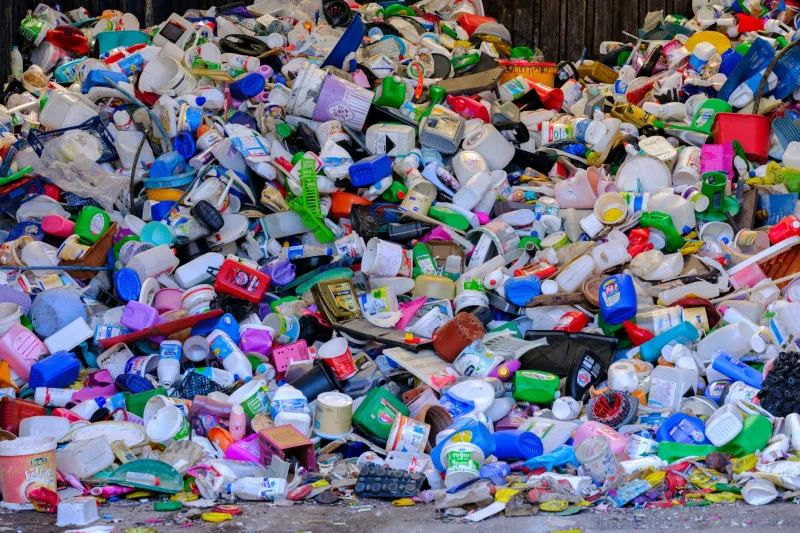
The most effective response to disposal liability is not simply improved documentation—it is redirecting scrap material away from waste streams entirely. PVC foam board is a recoverable thermoplastic. Scrap panels, offcuts, and end-of-life assemblies can be processed through established PVC recycling networks, removing the material from regulated waste classification and, in many cases, generating a modest recovery credit.
Several regional and national PVC recycling programs accept post-industrial thermoplastic scrap. The Vinyl Institute maintains resources connecting industrial generators with certified recyclers capable of processing PVC foam board. Facilities generating consistent volumes of clean, uncontaminated scrap are generally better positioned to establish formal recycling agreements than those disposing of mixed or contaminated material.
For facilities with significant scrap volumes, partnering with a material recovery vendor also supports broader sustainability reporting objectives. Diverting PVC foam board from landfill contributes to measurable waste reduction metrics, which carry increasing weight in corporate sustainability disclosures and procurement qualification processes.
A Practical Compliance Checklist
Facilities seeking to assess and address their PVC foam board disposal compliance posture should work through the following framework:
- Conduct a waste stream audit. Identify all points in the operation where PVC foam board scrap is generated, including fabrication, installation, maintenance, and decommissioning activities.
- Review state-specific disposal requirements. Consult the environmental regulatory agency in each state where the facility operates to confirm current thermoplastic waste disposal standards.
- Evaluate existing waste disposal contracts. Confirm that hauler agreements accurately identify PVC foam board as a separate waste stream and that disposal methods comply with applicable regulations.
- Establish segregation protocols. Implement physical separation of PVC foam board scrap from general solid waste at the point of generation.
- Document all disposal activity. Maintain accurate waste manifests that correctly identify material composition, volume, and disposal destination.
- Explore recycling partnerships. Contact regional PVC recyclers or the Vinyl Institute to determine whether scrap volumes qualify for material recovery programs.
- Train relevant personnel. Ensure that facility managers, maintenance staff, and procurement personnel understand applicable disposal requirements and internal protocols.
- Schedule periodic compliance reviews. Environmental regulations evolve. Build regulatory review into annual compliance calendars rather than treating it as a one-time exercise.
Closing the Gap Before Regulators Do
The regulatory environment surrounding industrial plastic waste is not becoming more permissive. State environmental agencies are investing in enforcement capacity, and federal oversight of solid waste management has intensified alongside broader policy attention to plastics in the environment. Facilities that have not formally addressed PVC foam board disposal within their compliance programs are operating with a known gap—one that carries quantifiable financial consequences.
The good news is that the path to compliance is well-defined. Accurate waste stream identification, appropriate disposal partnerships, and consistent documentation eliminate the majority of regulatory exposure. For facilities already committed to rigorous operational standards, extending that discipline to end-of-life material management is a logical and financially sound step.
At PVC Foam Board Sheet, we recognize that responsible material stewardship extends beyond the point of installation. Understanding the full lifecycle of PVC foam board—including its end-of-life obligations—is part of what it means to work with this material professionally.