What's Already Costing You: Running a Systematic PVC Foam Board Audit While the Facility Stays Online

Most industrial facilities don't have a foam board problem they can see. The waste is quieter than that—spread across miscut panels in the scrap bin, over-specified sheet thicknesses that nobody questioned, adhesive failures nobody documented, and inventory sitting in climate-uncontrolled storage slowly degrading. When operations managers finally run the numbers, the figure that comes back is rarely small. Facilities that conduct rigorous material audits routinely uncover recoverable costs ranging from $50,000 to well over $500,000—not through capital investment, but through understanding what they already have and how it's actually being used.
The good news is that this kind of audit doesn't require a production shutdown, a third-party consultant, or a major software platform. It requires methodology, discipline, and the willingness to look honestly at material flows that have often been invisible for years.
Why Foam Board Waste Is Structurally Underreported
In most industrial environments, PVC foam board is treated as a consumable rather than a managed material. It gets ordered, received, cut, installed, and—if there's leftover material—either stored informally or discarded. Because individual panel costs are relatively modest compared to major capital expenditures, waste tends to fly below the threshold where anyone formally tracks it.
But the aggregate picture is different. A mid-sized manufacturing facility processing several hundred sheets per quarter across insulation, partitioning, signage substrates, and equipment enclosures can easily accumulate tens of thousands of dollars in annual waste from cut-offs alone—before accounting for installation errors, specification mismatches, or material degradation from improper storage.
The structural problem is that this waste doesn't appear on a single line item. It's distributed across procurement records, maintenance budgets, labor hours, and disposal costs in ways that make it nearly invisible to anyone who isn't specifically looking for it.
Phase One: Inventory Reconciliation
The first phase of a foam board audit is deceptively straightforward: find out what you actually have versus what your records say you have.
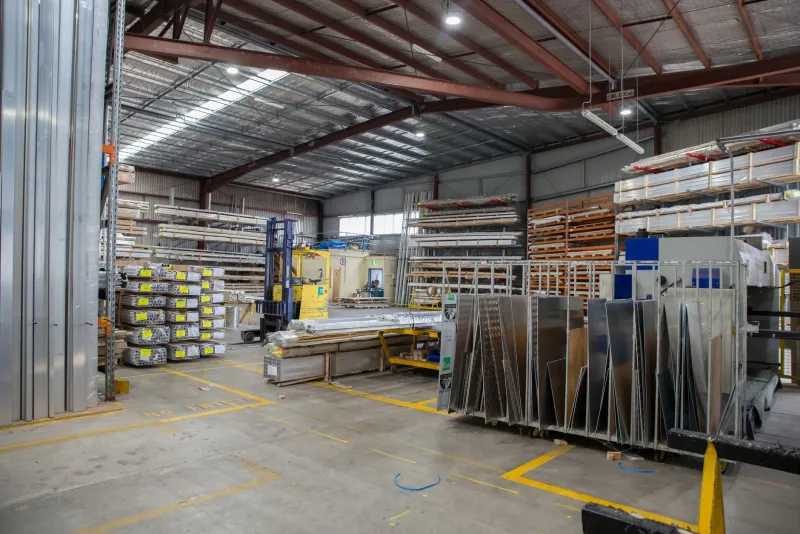
Begin by physically locating every sheet of PVC foam board on site—storage rooms, secondary warehouses, staging areas, and any informal holding locations where excess material tends to accumulate. Catalog each sheet by thickness, density, and dimensions. Note condition: warping, surface contamination, UV yellowing, or delamination are all indicators of storage or handling failures that represent sunk costs.
Compare this physical count against procurement records for the trailing 12 to 24 months. The gap between what was ordered and what's currently accounted for—whether installed, scrapped, or in storage—is your first data point. In facilities with poor material tracking, this gap routinely represents 10 to 18 percent of total procurement spend.
This phase can be completed during normal operations. Assign it to maintenance personnel during low-activity windows, or structure it as a rolling count across different facility zones over two to three weeks.
Phase Two: Scrap Rate Analysis
Cut waste is the most visible and most quantifiable source of foam board loss. The benchmark for well-managed fabrication operations is a scrap rate below 8 percent by area. Facilities without formal nesting or cut optimization routinely run 15 to 25 percent.
To measure your current rate, collect cut-off material from a representative two-week production window. Weigh or measure the scrap by area and divide by total material consumed during the same period. This gives you a baseline scrap percentage.
Once you have that number, the analysis becomes more granular. Where is the waste being generated? Audit-specific workstations or fabrication zones to identify whether the problem is concentrated—a particular saw setup, a specific installer's cutting habits, or a job type that consistently generates oversized cut-offs. High scrap rates on straight-line cuts often indicate a tooling or setup issue. High scrap on complex profiles may indicate an opportunity to introduce nesting software or template guides.
Facilities that move from unmanaged cutting to basic nesting protocols typically recover 6 to 12 percent of their annual foam board spend with no capital investment beyond process adjustment.
Phase Three: Installation Quality Review
Installation failures are harder to quantify but often represent the largest category of recoverable loss. A foam board panel that fails within 18 months due to improper adhesive selection, inadequate fastener spacing, or thermal expansion gaps that were never accounted for doesn't just cost the price of the panel—it costs the labor to remove and reinstall it, any associated downtime, and the secondary damage that may have occurred in the interim.
During the audit, walk installed foam board assemblies with a critical eye. Look for adhesive bond failures at panel edges, fastener pullout, buckling along seams where expansion gaps were undersized, and any evidence of moisture infiltration behind panels. Document each deficiency by location and estimated remediation cost.
Cross-reference these failure locations against the installation records. Were the adhesives specified correctly for the substrate and temperature range? Were expansion gaps calculated per manufacturer guidance? Was the installer following a written specification or improvising?
This review can be conducted during normal operations by maintenance staff with basic training on PVC foam board installation standards. It doesn't require production to stop—it requires structured observation and honest documentation.
Phase Four: Specification Alignment
Over-specification is a less obvious but meaningful source of unnecessary spend. It occurs when a facility is purchasing a heavier-density or thicker-gauge foam board than the application actually requires—often because an original specification was written conservatively and never revisited, or because procurement defaulted to a single SKU for simplicity.
Review your current foam board specifications against the actual performance demands of each application category in your facility. Interior partition panels in a dry warehouse environment do not require the same density as exterior-facing insulation panels in a Gulf Coast facility. Signage substrate applications may not require the same thickness as structural panel applications. Where there is a mismatch between specification and requirement, there is an opportunity to right-size the purchase without compromising performance.
This phase often benefits from a brief consultation with a knowledgeable foam board supplier who can validate whether current specifications are appropriate or unnecessarily conservative.
Benchmarking and Prioritization
Once the four phases are complete, compile findings into a single cost recovery matrix. Assign a dollar value to each identified opportunity—scrap reduction, storage loss prevention, installation failure remediation avoidance, and specification optimization—and rank by magnitude and ease of implementation.
Industry benchmarks to measure against include: scrap rates below 8 percent for managed fabrication operations, storage losses below 2 percent of annual procurement value, installation failure rates below 3 percent of installed panels per year, and specification accuracy rates above 90 percent across application categories.
Facilities that are materially above these benchmarks in two or more categories are almost certainly sitting on six-figure recovery opportunities. The audit makes that visible. Implementation—which can be phased across a 12-month operational calendar without disrupting production—is what converts that visibility into recovered margin.
The Case for Making This a Recurring Practice
A foam board audit conducted once is useful. Conducted annually, it becomes a management discipline that compounds over time. As specifications are refined, cutting practices improve, and storage protocols tighten, the baseline improves—and subsequent audits become faster and more targeted.
For maintenance and operations managers who are accountable for facility cost performance, this is among the highest-return analytical exercises available. It requires no capital, no production disruption, and no external expertise that isn't already available through a qualified materials supplier. It requires only the structured attention that any well-managed industrial operation should be applying to its material assets.
The waste is already there. The audit is how you find it.