Cutting Smarter, Not Harder: How Waste Reduction in PVC Foam Board Operations Recovers Thousands Per Project
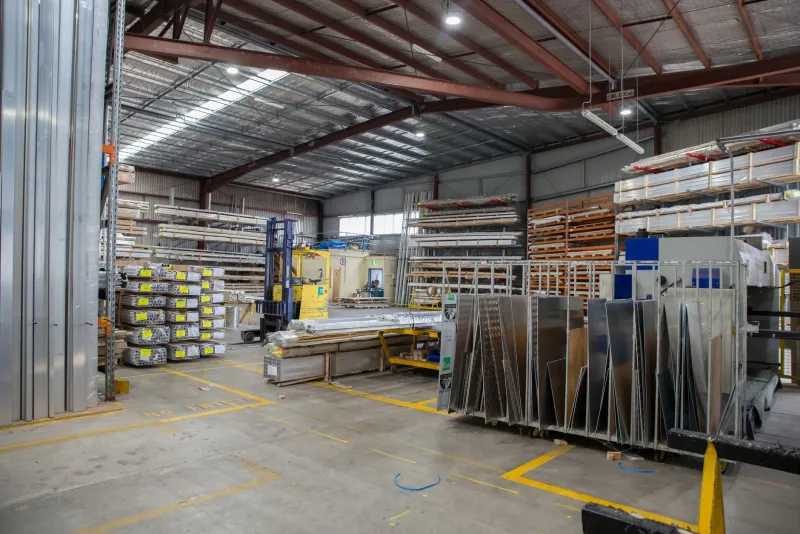
In the accounting ledgers of large-scale construction and manufacturing projects, PVC foam board typically appears as a straightforward material cost. Procurement teams price per sheet, multiply by quantity, and move on. What rarely appears in those calculations is a subtler but equally significant figure: the cost of what gets discarded.
Industry estimates drawn from fabrication shops, commercial contractors, and panel system manufacturers suggest that cutting waste—off-cuts, misaligned sheets, improperly sequenced runs—can account for anywhere between 8 and 15 percent of total PVC foam board material spend on complex projects. On a $200,000 material order, that range translates to $16,000 to $30,000 in avoidable loss. Across an annual portfolio of projects, the number compounds rapidly.
The professionals who have addressed this problem directly are not doing so through abstract cost-cutting mandates. They are applying specific technical strategies at the point of fabrication—and the results are concrete enough to alter how procurement and operations teams think about material planning from the outset.
Why Cutting Waste Is Systematically Underestimated
The disconnect begins at the specification stage. When estimators calculate board quantities, they typically apply a standard overage percentage—often 10 percent—as a buffer against breakage and dimensional variation. This approach, while practical, does not account for the structural inefficiency of how sheets are actually cut on the job.
PVC foam board, unlike flexible materials, cannot be folded or compressed to accommodate irregular shapes. Every off-cut is a fixed-dimension remnant. If those remnants are not tracked, catalogued, and reintegrated into subsequent cuts, they accumulate as waste. In high-volume fabrication environments where crews are working under deadline pressure, remnant tracking is frequently deprioritized—and the material cost of that deprioritization is absorbed quietly into project overhead.
A fabrication manager at a Midwest panel systems manufacturer described the problem directly: "We were ordering 12 percent over our estimated need on every run. We thought that was conservative budgeting. It turned out we were just funding a disorganized cutting floor."
Nesting Software: The Highest-Leverage Intervention
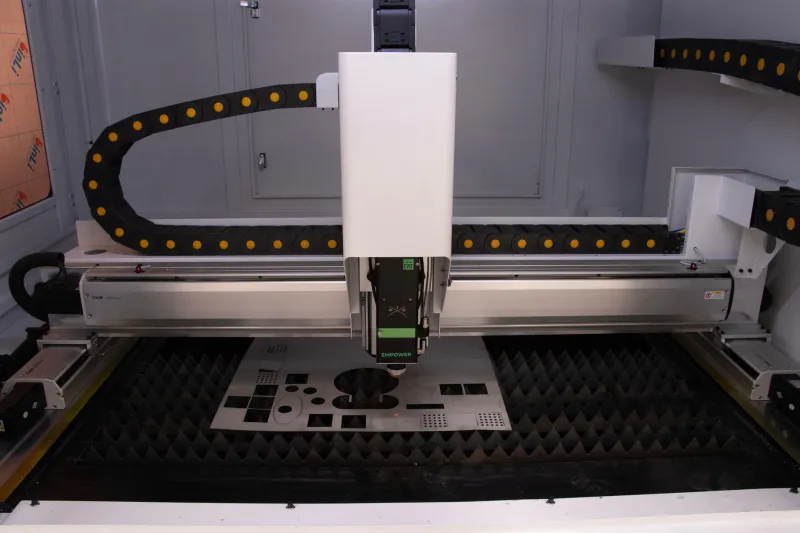
For operations processing significant sheet volumes, nesting software represents the single most impactful efficiency tool available. Nesting programs analyze the full inventory of required cut dimensions for a given project and calculate the optimal arrangement of those cuts across available sheet stock—minimizing the area of unusable remnants.
In woodworking and metal fabrication, nesting software has been standard practice for years. Its adoption in PVC foam board fabrication has been slower, partly because the material's relative ease of manual cutting has reduced the perceived urgency. That perception is changing as project scales increase and material costs rise.
A commercial contractor operating across the Southeast implemented nesting software for PVC foam board panel production on a large-format retail construction project. Prior to implementation, the operation was generating approximately 14 percent waste by area. Post-implementation, that figure dropped to just under 6 percent on comparable sheet dimensions. Across the project's material volume, the reduction translated to a direct material cost saving that offset the software licensing cost within the first month of use.
Modern nesting programs are not prohibitively complex. Many integrate with standard shop management systems and can be configured for the specific sheet dimensions and thickness ranges common to PVC foam board product lines. The learning curve is manageable, and the payback timeline is typically measured in weeks rather than quarters.
Blade Selection and Feed Rate: The Technical Details That Matter
Nesting optimization addresses layout efficiency, but cut quality is equally consequential. A poorly executed cut wastes material in two ways: it produces a defective piece that must be recut, and it degrades the edge quality of adjacent sections. Over a full production run, cumulative edge loss and recut volume add up.
PVC foam board responds differently to cutting tools than wood or metal. The cellular structure of the material requires blades with fine tooth counts and appropriate set geometry to prevent tearing, melting, or surface crazing. Using general-purpose blades—a common shortcut in mixed-material fabrication environments—produces irregular edges that require additional trimming and increase the rate of rejected pieces.
Specialists in PVC foam board fabrication consistently recommend carbide-tipped blades with 80 teeth or more for table saw applications, combined with moderate feed rates. High feed rates generate heat at the cut line, which can cause localized softening in the cellular matrix and produce inconsistent edge profiles. The additional time invested in controlled feed rates is returned through reduced rework and lower remnant volume.
For CNC router applications, single-flute upcut spiral bits have demonstrated superior performance in PVC foam board, providing effective chip evacuation and cleaner edge geometry compared to multi-flute configurations.
Material Staging and Remnant Management Protocols
Technology alone does not resolve waste. Operational discipline at the cutting floor level is equally critical. Facilities that have achieved sustained waste reduction share a common practice: formalized remnant management.
This involves physically cataloguing off-cuts by dimension after each cutting run, storing them in labeled staging areas, and integrating them into nesting calculations for subsequent jobs. The administrative overhead is minimal. The material recovery is substantial.
A fabrication operation in the Pacific Northwest implemented a remnant management protocol alongside its nesting software adoption. Within six months, the facility had reduced new sheet consumption on smaller secondary projects by approximately 18 percent by drawing on catalogued remnant inventory. The protocol required no capital investment beyond shelving and a basic tracking spreadsheet.
Material staging—sequencing sheets through the cutting floor in an order that aligns with nesting plan outputs—further reduces handling time and the incidence of sheets being cut out of sequence, which is a primary driver of preventable waste.
Translating Efficiency Into Budget Language
For procurement professionals making the case for investment in cutting optimization, the financial framing matters. The argument is not primarily about technology adoption; it is about recovering material expenditure that is currently leaving the facility as scrap.
A useful baseline calculation: identify current waste percentage by dividing total scrap weight or area by total input material over a defined period. Apply that percentage to projected annual material spend. The resulting figure represents the upper bound of recoverable value. Even capturing half of that through optimization measures—a conservative outcome based on documented field results—generates a return that justifies the operational changes required.
For operations spending $500,000 or more annually on PVC foam board, the financial case is rarely ambiguous. The question is not whether optimization is worthwhile. It is how quickly the tools and protocols can be implemented.
The Broader Operational Benefit
Beyond direct material cost recovery, reduced cutting waste carries secondary benefits that experienced operations managers recognize. Lower scrap volume reduces disposal costs and, in some jurisdictions, regulatory reporting obligations associated with solid waste streams. Cleaner cutting floors reduce the risk of handling incidents. More predictable material consumption improves procurement planning accuracy, reducing the frequency of emergency orders that carry premium pricing.
PVC foam board is a precision material. The facilities that treat it as such—applying the same rigor to its fabrication as to its specification and procurement—are consistently the ones achieving the strongest project economics. The hidden ROI of disciplined cutting practice is not hidden to them. It is a managed line item, and a profitable one.