Why US Manufacturers Are Abandoning Plywood and MDF for PVC Foam Board in 2024
The Material Calculus Is Changing on American Factory Floors
For decades, plywood and medium-density fiberboard (MDF) were the default choices for industrial fabricators, cabinetmakers, display manufacturers, and construction contractors across the United States. These materials were familiar, widely available, and supported by generations of institutional knowledge. Yet in 2024, procurement managers at facilities ranging from custom fixture shops in the Midwest to large-scale panel fabricators along the Gulf Coast are quietly rewriting their approved materials lists — and PVC foam board is increasingly at the top.
The shift is not driven by novelty. It is driven by numbers: reduced scrap rates, lower finishing costs, faster cycle times, and a material profile that holds up under conditions that cause wood-based products to fail prematurely. Understanding why this transition is accelerating requires a clear-eyed comparison across the dimensions that matter most to industrial buyers.
Weight, Machinability, and Shop-Floor Efficiency
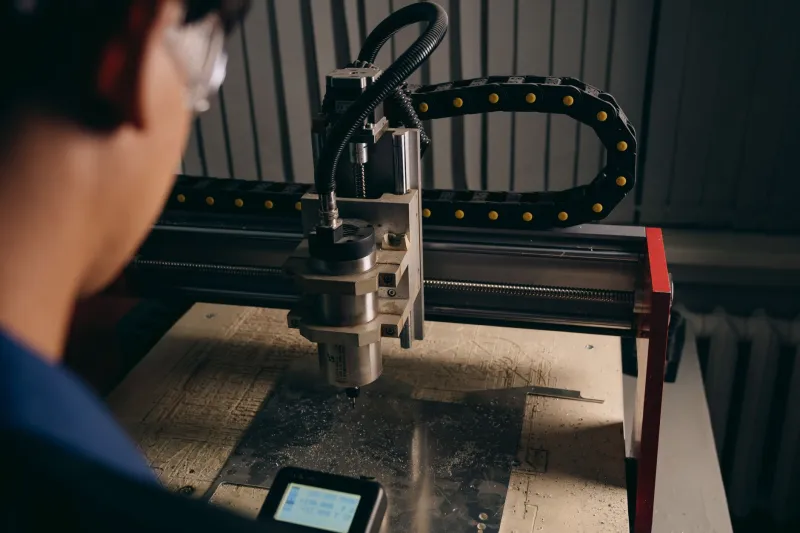
One of the first advantages that fabricators notice when they introduce PVC foam board into their workflow is its weight-to-rigidity ratio. A standard 1-inch sheet of plywood can weigh considerably more than a comparable PVC foam board panel of equivalent dimensions, depending on species and moisture content. For manufacturers running high-volume CNC routing operations, that weight differential translates directly into reduced operator fatigue, faster material handling, and lower ergonomic risk — all of which have measurable effects on throughput and worker compensation costs.
Machinability is another area where PVC foam board distinguishes itself. Unlike MDF, which generates fine particulate dust that clogs equipment and requires extensive respiratory protection compliance, PVC foam board produces coarser chips that are easier to manage under standard dust collection systems. Tooling wear is also generally lower, which extends the service life of router bits and saw blades — a cost that accumulates significantly in high-production environments.
A custom retail fixture manufacturer based in Ohio reported that after transitioning a core product line from MDF to PVC foam board, their average per-unit production time dropped by approximately 18 percent, largely attributable to reduced sanding requirements and the elimination of edge-banding steps that MDF finishing typically demands.
Moisture Resistance: Where Wood-Based Materials Consistently Fall Short
Perhaps the most operationally significant advantage of PVC foam board over plywood and MDF is its behavior in the presence of moisture. Wood-based panel products are hygroscopic — they absorb and release moisture in response to ambient humidity, which causes swelling, warping, delamination, and ultimately structural failure in demanding environments.
For manufacturers supplying products destined for exterior signage, marine applications, food processing environments, or high-humidity industrial spaces, this is not a theoretical concern. It is a warranty and liability issue. MDF in particular is highly susceptible to moisture damage; even moderate humidity exposure can cause edge swelling that renders precision-fabricated components unusable.
PVC foam board, by contrast, is inherently non-hygroscopic. It does not absorb water, does not swell at the edges, and does not delaminate under humidity cycling. A commercial signage fabricator in Florida — a state where outdoor humidity conditions are among the most challenging in the country — reported that switching from MDO plywood to PVC foam board for their exterior-facing sign substrates reduced their warranty replacement rate by more than 30 percent over a two-year period.
Total Cost of Ownership: Moving Beyond the Unit Price Comparison
A common objection raised during the initial evaluation of PVC foam board is its per-sheet cost, which can be higher than commodity plywood or MDF on a direct purchase-price basis. This comparison, however, is incomplete and often misleading for industrial buyers.
When total cost of ownership is calculated across the full production and service lifecycle, PVC foam board consistently demonstrates favorable economics. Consider the following cost categories that are frequently overlooked in surface-level material comparisons:
- Finishing and sealing costs: Wood-based materials typically require priming, sealing, or edge treatment before painting or laminating. PVC foam board accepts adhesives, paints, and films directly, eliminating several preparation steps.
- Scrap and waste rates: PVC foam board's dimensional stability means that precision-cut components are far less likely to be rejected due to warping or moisture-induced dimensional changes during storage or transit.
- Warranty and replacement costs: As illustrated by the Florida signage case, longer service life in real-world conditions significantly reduces the downstream cost burden on manufacturers.
- Disposal and compliance costs: MDF contains formaldehyde-based resins that complicate disposal and create indoor air quality compliance obligations. PVC foam board does not carry the same VOC profile.
A mid-sized point-of-purchase display manufacturer in Texas conducted an internal ROI analysis after piloting PVC foam board across three product lines. Their findings indicated a net cost reduction of approximately 12 percent per unit when all production and post-sale costs were factored in, despite paying a higher per-sheet price for the PVC material.
Sustainability Considerations in an Era of ESG Accountability
Environmental, social, and governance (ESG) reporting requirements are increasingly influencing material procurement decisions at US manufacturers, particularly those supplying large retail or government clients. Wood-based panel products, while derived from a renewable resource, carry their own environmental complexities: deforestation concerns, formaldehyde emissions from adhesive resins, and high energy consumption in manufacturing.
PVC foam board is not without its own environmental profile considerations, and transparency demands that this be acknowledged. However, modern PVC foam board formulations have advanced considerably. Many products available through industrial suppliers today are manufactured without heavy metal stabilizers, and the material's long service life means that the environmental cost of production is amortized over a substantially longer use period than wood-based alternatives that require earlier replacement.
Additionally, PVC foam board offcuts and trim waste are increasingly accepted in post-industrial recycling streams, and some manufacturers have established closed-loop take-back programs for production scrap.
The Competitive Advantage of Making the Switch Early
The manufacturers and fabricators who have adopted PVC foam board proactively are not simply chasing a trend. They are building operational competencies — in tooling selection, adhesive chemistry, finishing techniques, and supply chain management — that will differentiate their capabilities as client specifications increasingly reflect the performance demands that PVC foam board is uniquely positioned to meet.
For procurement professionals and production engineers evaluating their material strategies for 2024 and beyond, the evidence from early adopters is clear: the transition from traditional wood-based panels to PVC foam board is not merely feasible. In a growing range of industrial applications, it is the more defensible business decision.