In-House PVC Foam Board Fabrication: The Business Case That Usually Doesn't Add Up
Vertical integration has an intuitive appeal. When a manufacturing facility or construction operation consumes PVC foam board in significant volumes, the logic of capturing fabrication in-house seems straightforward: eliminate the supplier margin, control the production schedule, and tailor output precisely to internal specifications. On paper, the economics appear compelling. In practice, the picture is considerably more complicated.
The facilities that have pursued in-house PVC foam board fabrication and subsequently abandoned or scaled back the effort share a common experience: the costs they anticipated were not the costs that materialized. Understanding where those projections go wrong—and under what specific conditions in-house fabrication actually delivers value—is essential for any industrial buyer considering this path.
The Capital Commitment Is Larger Than the Initial Estimate Suggests
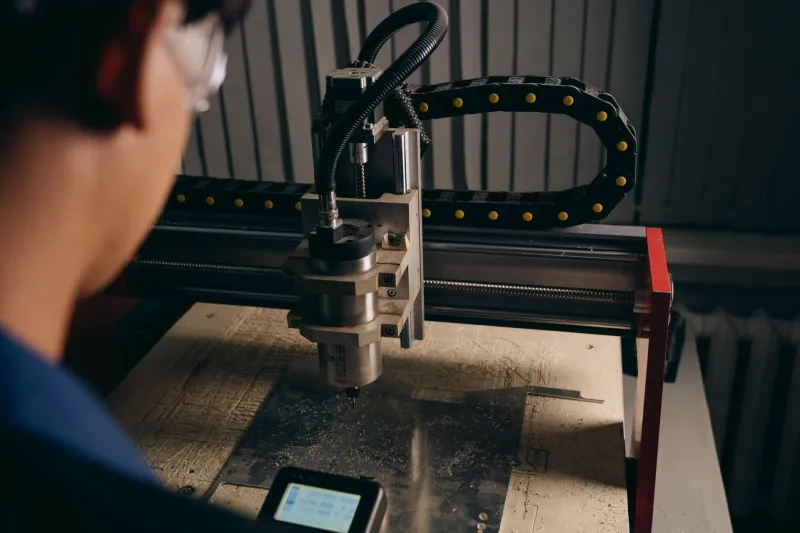
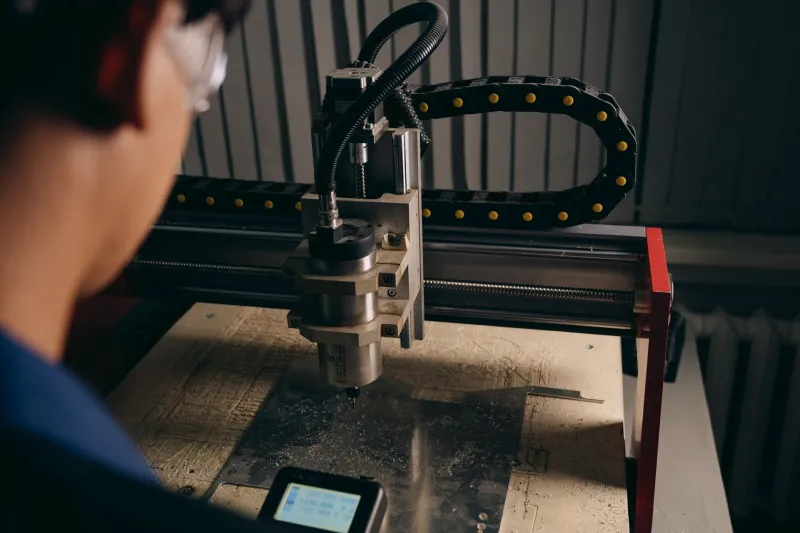
The first cost that surprises most facilities is equipment. Industrial-grade CNC routing and cutting equipment capable of processing PVC foam board to tight tolerances—maintaining dimensional accuracy across board thicknesses, densities, and custom profiles—represents a meaningful capital investment. Entry-level CNC router tables adequate for basic flat-panel work begin in the range of $30,000 to $60,000. Equipment capable of handling the material variability, throughput volumes, and precision tolerances required for industrial fabrication—including vacuum hold-down systems, dust extraction rated for PVC particulate, and multi-axis capability—often exceeds $150,000 before installation and commissioning costs are included.
Beyond cutting equipment, facilities frequently underestimate the infrastructure requirements: dedicated ventilation systems for PVC dust and off-gassing management, compressed air systems, material handling equipment for moving full-format sheets safely, and storage systems that prevent board warping during inventory hold periods. In aggregate, the facility preparation and ancillary equipment costs often exceed the primary machinery investment.
Depreciation schedules for this equipment typically run seven to ten years, meaning the capital cost must be absorbed across a sustained, high-volume production run to achieve meaningful amortization. Facilities that overestimate their internal consumption volumes—a common planning error—find themselves carrying underutilized equipment that never reaches the throughput levels required to justify its cost.
The Skill Gap Is Harder to Close Than Expected
PVC foam board fabrication is a process discipline, not simply a machine operation. Achieving consistent results across varying board densities, thicknesses, and surface treatments requires operators who understand the material's behavior under cutting, routing, and bonding conditions—knowledge that is developed through sustained experience, not training manuals.
The specific competencies required include feed rate and spindle speed optimization for different board grades, tooling selection and maintenance protocols for PVC-specific cutting geometries, adhesive selection and surface preparation for bonded assemblies, and quality inspection methods for detecting subsurface voids, edge delamination, and dimensional drift.
In a tight US labor market, recruiting individuals with this combination of skills is difficult. More commonly, facilities attempt to develop these competencies internally, which extends the timeline to productive operation by six months to a year or more and introduces a period of elevated waste rates and quality inconsistency during which the cost-per-part produced is substantially higher than the projected steady-state figure.
Employee turnover compounds this challenge. When the one or two individuals who have developed genuine proficiency with the process leave the organization, institutional knowledge departs with them. Rebuilding that competency restarts the learning curve at significant cost.
Waste Rates Undermine the Margin Arithmetic
Professional PVC foam board fabricators achieve waste rates—the ratio of material consumed to usable output produced—that reflect years of nesting optimization, toolpath refinement, and process discipline. Facilities establishing in-house operations typically experience waste rates substantially higher than those of specialized suppliers during the ramp-up period, and many never fully close the gap.
For a material with a meaningful cost per sheet, the financial impact of elevated waste rates is direct and significant. A facility that projects a 5% waste rate based on supplier benchmarks but actually operates at 15% to 20% during the first year of production is absorbing material costs that were never included in the business case. When those costs are allocated back to the parts produced, the apparent margin advantage of in-house fabrication frequently disappears.
Quality Control Complexity Is Often Underestimated
Specialized PVC foam board fabricators maintain quality systems—dimensional inspection protocols, surface defect detection procedures, density verification processes, and traceability records—that have been refined over years of production. Replicating these systems in-house requires not only the measurement equipment and documentation infrastructure but the institutional knowledge to interpret results and make meaningful process corrections.
For facilities supplying components into regulated industries—construction applications subject to building code compliance, industrial environments with OSHA-relevant safety requirements, or manufacturing processes with customer-specified quality documentation requirements—the burden of maintaining and demonstrating quality system compliance adds administrative overhead that is rarely captured in initial feasibility analyses.
When In-House Fabrication Does Make Sense
This analysis is not an argument that in-house fabrication is never appropriate. There are specific conditions under which it creates genuine value:
- Extremely high, consistent internal volume: Facilities consuming tens of thousands of square feet of PVC foam board per month, with stable and predictable demand, can achieve the throughput necessary to amortize equipment costs and justify dedicated labor.
- Highly proprietary configurations: When the fabricated geometry, surface treatment, or material combination represents a genuine competitive advantage that cannot be safely disclosed to an external supplier, in-house capability may be warranted for strategic reasons independent of pure economics.
- Geographic isolation from qualified suppliers: In regions where lead times from specialized fabricators are prohibitive and freight costs are substantial, the calculus may shift toward internal capability—though this scenario is increasingly uncommon in the continental US.
- Captive use in a highly automated environment: Facilities where CNC fabrication is already a core competency—precision metal fabricators, aerospace component manufacturers—may find that adding PVC foam board to their material repertoire is a modest extension of existing capability rather than a new discipline.
The Outsourcing Alternative Deserves a Rigorous Comparison
For most industrial facilities, the honest comparison is not between in-house fabrication and the status quo, but between in-house fabrication and a well-structured relationship with a specialized PVC foam board supplier offering custom fabrication services. Such suppliers typically offer precision cutting, custom dimensions, bonded assemblies, and surface-treated panels produced on equipment optimized for the material, with quality systems already in place and waste costs already absorbed into their production economics.
The flexibility of outsourcing—the ability to adjust order volumes without carrying idle equipment, to access a supplier's engineering expertise, and to shift risk for material quality back to the supplier—has real economic value that rarely appears in vertical integration feasibility models.
Before committing capital to in-house fabrication, industrial buyers are well served by developing a detailed total-cost model that includes equipment, facility modification, labor (including benefits and turnover risk), waste, quality system infrastructure, and the opportunity cost of management attention diverted to a non-core manufacturing activity. In most cases, that model will produce a result that makes the outsourcing case clearly.