Upgrading Without Stopping: How Industrial Facilities Are Switching to PVC Foam Board Insulation While Staying Fully Operational
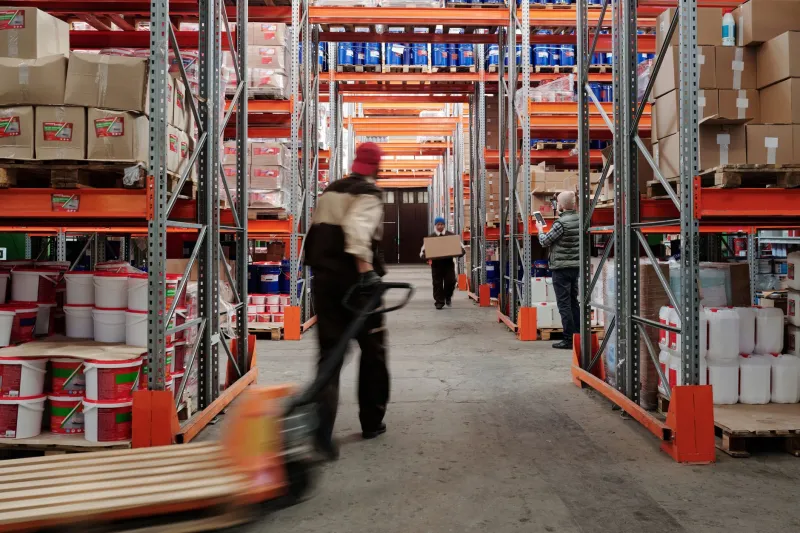
For decades, the prospect of upgrading insulation in a functioning industrial facility carried an almost unavoidable consequence: downtime. Shutting down a refrigerated warehouse, pausing a manufacturing line, or taking an HVAC system offline for weeks was simply accepted as the cost of modernization. That calculus is shifting. Across the United States, facility managers are executing full-scale insulation retrofits using PVC foam board—and doing so while operations continue at or near normal capacity.
The reasons are rooted in the material's physical characteristics, installation flexibility, and the economic pressure to avoid production losses at any cost. Understanding how these retrofits actually work—and why PVC foam board is uniquely suited to live-facility upgrades—is increasingly essential knowledge for professionals managing aging industrial infrastructure.
The Retrofit Problem Most Facilities Are Facing
A significant portion of US industrial building stock was constructed between the 1960s and 1990s, when energy costs were lower and insulation standards less demanding. Facilities built to those earlier specifications are now operating at a thermal disadvantage: higher heating and cooling loads, greater moisture vulnerability, and in many cases, insulation materials that have degraded, compressed, or absorbed moisture over decades of service.
Fiberglass batt insulation loses effective R-value when compressed or wet. Mineral wool, while durable, is heavy and difficult to work with in constrained retrofit environments. Spray polyurethane foam offers good thermal performance but requires full surface preparation, curing time, and chemical exposure management that can be incompatible with active production areas.
Facility managers seeking to upgrade thermal performance while maintaining compliance with current energy codes—including ASHRAE 90.1 and its state-level derivatives—face a genuine dilemma: how to modernize without stopping.
Why PVC Foam Board Changes the Installation Equation
PVC foam board's suitability for live-facility retrofits stems from several interconnected properties. First, it arrives on-site as a finished, dimensionally stable panel that requires no curing, off-gassing period, or specialized respiratory protection during installation. Workers can cut, fit, and fasten panels in occupied spaces without generating the chemical exposure risks associated with spray foam or the airborne fiber hazards of fiberglass.
Second, PVC foam board's closed-cell structure means it contributes meaningful R-value per inch without requiring the thick profiles that would complicate retrofit geometry. In cold storage environments where wall cavity depth is fixed and every inch of interior space has a dollar value, this matters significantly.
Third, the material's moisture resistance eliminates a common retrofit complication. When old insulation is removed from cold storage or refrigerated processing areas, condensation management during the transition period becomes a concern. PVC foam board, being impermeable to moisture absorption, can be installed in stages without creating a window of vulnerability during which exposed substrate or partial coverage would allow condensation to accumulate.
Phased Installation: The Strategy That Makes Live Retrofits Work
The operational continuity of a live-facility retrofit depends almost entirely on how the project is sequenced. Experienced contractors working with PVC foam board have developed phased approaches that treat the facility as a series of discrete zones rather than a single project scope.
In a typical cold storage retrofit, the facility is divided into sections that can be isolated from active inventory or production on a rotating basis. One zone is cleared, stripped, and re-insulated with PVC foam board panels while adjacent zones remain fully operational. Because PVC foam board installation is clean and fast—experienced crews can complete a standard wall section in a fraction of the time required for spray foam application and cure—each zone's downtime is measured in hours rather than days.
For HVAC duct and mechanical insulation retrofits, the phased approach follows system zones rather than physical areas. One air handling unit or duct branch is taken offline during off-peak hours for insulation replacement, while the remainder of the system maintains climate control. PVC foam board's ease of field fabrication—it cuts cleanly with standard tools and adheres reliably to duct surfaces—makes these rapid-turnaround installations practical.
Real-World Timelines and What to Expect
Retrofit timelines vary by facility type, but the operational advantages of PVC foam board are consistent across applications. A mid-sized refrigerated distribution center of approximately 50,000 square feet has been completed in phased retrofits spanning four to six weeks, with no single operational zone offline for more than two to three days at a time. Comparable projects using spray foam have required full facility shutdowns of two weeks or longer.
Manufacturing facilities retrofitting interior wall and ceiling insulation in process areas report similar efficiencies. The absence of curing requirements means that a panel installed during a Friday evening shift can be in a fully operational environment by Monday morning without concern for off-gassing or surface preparation delays.
For HVAC mechanical insulation specifically, the ability to pre-fabricate PVC foam board sections off-site—cut to precise dimensions for duct runs, fittings, and transitions—substantially compresses field installation time. Pre-fabrication also improves quality consistency, which has direct implications for long-term thermal performance and maintenance intervals.
ROI Compared to Traditional Insulation Upgrades
The financial case for PVC foam board retrofits rests on three pillars: energy savings, avoided downtime costs, and extended service life.
On the energy side, upgrading from degraded or substandard insulation to properly specified PVC foam board panels consistently delivers measurable reductions in heating and cooling loads. Cold storage operators in particular report significant compressor runtime reductions following thermal envelope upgrades, with payback periods on insulation investment ranging from two to five years depending on local energy costs and the severity of the previous insulation's degradation.
Avoided downtime costs are harder to quantify universally but are often the dominant factor in the ROI calculation. For a food processing facility running three shifts, a two-week shutdown for a conventional insulation upgrade might represent production losses in the hundreds of thousands of dollars. A phased PVC foam board retrofit that limits any single zone to a 48-hour window changes the financial profile of the project entirely.
Service life projections further strengthen the long-term case. PVC foam board's resistance to moisture, biological growth, and mechanical damage means that a properly installed retrofit is unlikely to require replacement within the useful life of the facility itself—eliminating the recurring upgrade costs that facilities with fiberglass or organic-based insulation materials face on 15- to 20-year cycles.
Regulatory Compliance as a Retrofit Driver
Beyond energy economics, regulatory pressure is accelerating retrofit activity across US industrial sectors. Updated energy codes, stricter food safety regulations governing temperature-controlled environments, and growing insurance requirements related to fire performance are all creating compliance timelines that facility managers can no longer defer.
PVC foam board's inherent flame-retardant properties and its compatibility with Class A assembly ratings in many configurations make it a straightforward compliance solution in regulated environments. For food facilities subject to FDA and USDA inspection, the material's non-porous surface and resistance to microbial growth address sanitation requirements that older insulation materials cannot meet.
Facility managers who approach the retrofit decision through the lens of both energy performance and regulatory alignment find that PVC foam board consistently addresses both dimensions without requiring material compromises.
Planning the Retrofit: Where to Begin
A successful live-facility retrofit begins with a thorough thermal audit that identifies the highest-priority zones by heat gain, heat loss, or compliance gap. Not every facility requires a complete envelope overhaul; in many cases, targeting the three or four zones with the greatest thermal deficiency delivers the majority of the performance and compliance benefit at a fraction of the full-project cost.
Engaging a contractor with documented experience in phased PVC foam board installation—and coordinating closely with operations management to align zone sequencing with production schedules—is essential to realizing the operational continuity advantages the material makes possible.
The retrofit revolution underway in US industrial facilities is not a trend driven by novelty. It is a response to real operational constraints, genuine financial pressures, and the availability of a material that finally makes meaningful insulation upgrades compatible with the realities of continuous industrial operation.