On the Job With PVC Foam Board: A Field Guide to Cutting, Bonding, and Chemical Compatibility
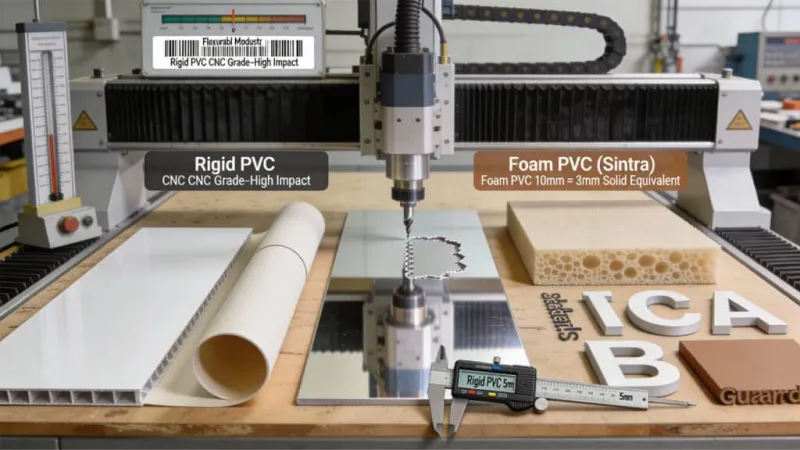
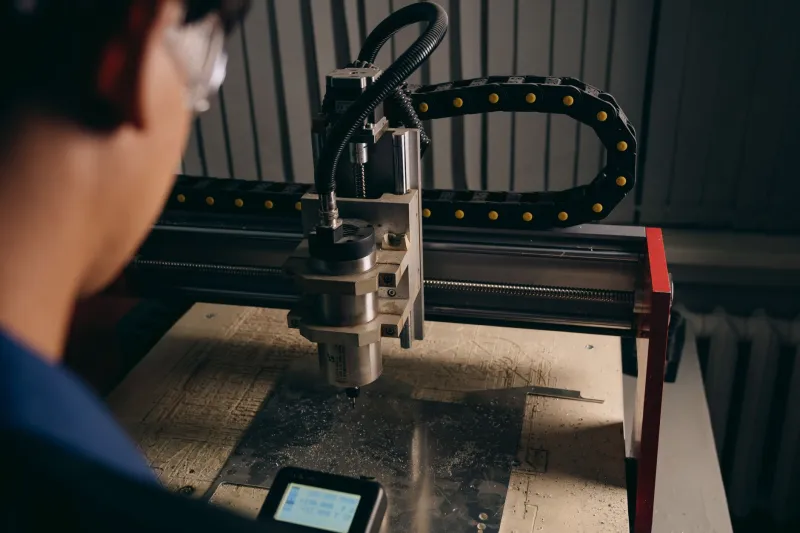
Photo: fabricator routing cutting PVC panel material workshop industrial job site, via www.katariatechzone.com
For site managers and skilled fabricators, the real evaluation of any panel material happens not in a spec sheet but on the job. How does it cut? What happens when you route a profile and the bit catches? Which adhesives actually hold under heat and vibration, and which ones peel back at the first stress event? These are the questions that determine whether a material earns a permanent place in a contractor's toolkit—or gets written off after one frustrating installation.
PVC foam board has built a strong reputation in US industrial and commercial construction, but that reputation rests on the assumption that fabricators know how to work with it correctly. The material has genuine performance advantages, but it also has specific handling requirements that differ meaningfully from plywood, MDF, aluminum composite, or standard rigid foam. This guide addresses those requirements directly, drawing on field-proven practice across construction, manufacturing fit-out, and industrial fabrication applications.
Cutting: Matching the Tool to the Task
PVC foam board cuts cleanly with a variety of tools, but not all cutting methods produce equivalent results. The choice of tool matters, and so does the condition of the tooling.
Circular and table saws are the workhorses of most panel cutting operations. For PVC foam board, carbide-tipped blades with a high tooth count (80T or higher for finish cuts) produce the cleanest edges with minimal chipping or surface melting. Blade speed should be moderate; running a blade too fast generates frictional heat that can soften the cut edge and cause material to gum up against the blade body. Feeding the material at a steady, consistent rate—neither rushing nor stalling—produces the best results.
Jigsaws and band saws handle curved cuts well, provided the blade pitch is fine enough. Coarse-pitch blades designed for softwood will tear rather than slice the cellular structure of PVC foam board. A blade designed for plastics or non-ferrous metals is the better choice and will extend tool life as well.
CNC routing is where PVC foam board truly demonstrates its fabrication value. The material machines with precision, holding tight tolerances on complex profiles that would chip or tear in MDF or plywood. Single-flute or two-flute upcut spiral bits in carbide are the standard recommendation for most routing operations. Climb cutting on finish passes reduces surface fuzz and produces sharper edge definition. Spindle speeds and feed rates should be tested on scrap material before committing to finished panels, as formulation density affects the optimal combination.
One common field mistake is using router bits designed for wood composites without adjustment. Wood-optimized bits tend to generate more heat through friction in PVC foam applications, which can cause edge softening and dimensional drift on tight-tolerance cuts. Tooling intended for plastics or PVC specifically will outperform wood tooling in both cut quality and longevity.
Fastening: Mechanical Connections That Last
PVC foam board accepts mechanical fasteners well, but pull-out resistance varies with material density. At lower densities (around 3–4 lb/ft³), screw pull-out values are more modest, and fastener spacing should account for this in structural applications. Higher-density boards—in the 6–10 lb/ft³ range—offer substantially better fastener retention and are the appropriate specification for applications where panels bear significant load or are subjected to vibration.
For most interior applications, self-tapping screws with a coarse thread profile outperform fine-thread fasteners in terms of pull-out resistance. Pre-drilling is recommended for edge fastening to prevent surface cracking, particularly in colder ambient temperatures where the material is slightly less ductile. Countersinking should be done carefully; PVC foam board does not require the aggressive countersink depth needed for wood, and over-countersinking strips the surface layer.
In high-vibration environments—machinery enclosures, processing equipment housings, vehicle interior panels—mechanical fasteners alone may be insufficient. Combining fasteners with a compatible structural adhesive creates a bonded-and-fastened assembly that distributes dynamic loads across the panel face rather than concentrating stress at individual fastener points.
Adhesives: What Works and What Fails
Adhesive selection is one of the most consequential decisions in any PVC foam board installation, and it is also one of the most frequently mishandled. Not all adhesives are compatible with PVC, and some that appear to bond successfully in initial testing will fail under thermal cycling, chemical exposure, or sustained load.
Solvent-based PVC cements designed for rigid PVC applications offer strong bonds but require adequate ventilation and personal protective equipment. They are appropriate for applications where bond strength is the primary requirement and working time is not a major constraint.
Two-component structural adhesives—epoxies and methacrylates—are well-suited to demanding industrial applications. They provide high shear strength, good temperature resistance, and compatibility with most PVC foam board formulations. For bonding PVC foam board to metal substrates (aluminum extrusions, steel frames, stainless steel panels), a two-part methacrylate adhesive is generally the preferred choice among experienced fabricators.
Contact cements are widely used in general construction but require careful product selection for PVC foam applications. Neoprene-based contact cements are broadly compatible; solvent formulations should be tested for compatibility before use, as some solvents can soften or distort the foam matrix. Water-based contact cements are generally safer for the material but may offer lower initial tack and longer open times.
Construction adhesives are the category where failures most commonly occur. Many polyurethane and latex-based construction adhesives marketed for general panel bonding do not maintain adequate shear strength on PVC foam board surfaces, particularly under thermal stress or in humid environments. If a construction adhesive is required for logistical or scheduling reasons, surface preparation is critical: both the PVC foam board face and the substrate should be clean, dry, and lightly abraded to improve mechanical adhesion.
Chemical Resistance: Know Your Environment
One of PVC foam board's genuine advantages over competing materials is its broad chemical resistance profile. The material is unaffected by most dilute acids, alkalis, and common industrial cleaning agents—a property that makes it particularly valuable in food processing facilities, pharmaceutical manufacturing environments, and chemical plant applications.
However, PVC foam board is not universally resistant. Concentrated oxidizing acids (nitric acid, concentrated sulfuric acid) will attack the material over time. Aromatic and chlorinated solvents—toluene, xylene, methylene chloride, and related compounds—can cause surface softening and dimensional change. In environments where these agents are present, material compatibility should be verified with the supplier before specification.
For most commercial cleaning protocols—including quaternary ammonium sanitizers, hydrogen peroxide-based cleaners, and dilute bleach solutions commonly used in US food and beverage facilities—PVC foam board performs reliably without surface degradation. This makes it a practical alternative to stainless steel in non-structural wall and ceiling applications where hygiene is a requirement but full-metal construction is cost-prohibitive.
Finishing and Integration
PVC foam board accepts a range of surface finishes, including vinyl wraps, direct-applied coatings, and laminated overlays. For painted finishes, a primer formulated for plastics or PVC is essential; standard latex primers do not develop adequate adhesion on smooth PVC surfaces and will peel under normal service conditions.
When integrating PVC foam board panels into complex assemblies—framed partitions, equipment enclosures, modular casework—leaving a small gap at abutting edges accommodates any residual thermal movement without telegraphing stress to surface finishes. In temperature-cycled environments, this detail is particularly important at transitions between PVC foam board and dissimilar materials with different expansion characteristics.
For fabricators new to the material, the learning curve is modest. PVC foam board is forgiving of minor tooling variations, holds dimension well during fabrication, and does not require the moisture management precautions that make wood-based substrates demanding in field conditions. With the right tooling, compatible adhesives, and an understanding of its chemical limits, it is a material that rewards skilled tradespeople with consistent, professional results.